
Sample report. Not an analysis of your photos. The centering is a real measurement and the odds are calculated just like in a real scan; the findings are made up to illustrate.
See the report at each level
Slide from Level I to Level III and watch the whole report change. A higher level can go either way: sometimes it saves you a disappointing submission, sometimes it gives you the confidence to send the card in.

What we see at Level I
With one photo per side we see three spots we're unsure about: a corner and the bottom edge on the back, and a faint line in the artwork. We can't tell for any of them whether it's real.
Charmander
Pokémon Card 151 (sv2a) · #168/165 · Art Rare · Japanese
Chance of a PSA 10
25%
possible
What we see
Most likely a PSA 8 or 9; PSA allows only one minor flaw for a 9.
Photo quality B. Flat photos at good resolution. Fine surface flaws can hide from flat light.
PSA chances
The chance your card gets this grade if you sent it in as it is now.
PSA 9 or better55%plausible
PSA 8 or better95%very likely
If you send it in as it is, this is roughly how it lands at PSA: 10 25%, 9 30%, 8 – 8.5 40%, 7 or lower 5%.
At other graders
Each company has its own limits, especially for back centering.
Beckett (BGS) 10 Pristine35%
9 or better 65%, 8 or better 95%
CGC 1020%
9 or better 55%, 8 or better 95%
TAG 1030%
9 or better 80%, 8 or better 95%
Your card under the loupe
The yellow lines show where we measured the inner border. The numbered dots are the spots that caught our eye; they're explained below the photos.
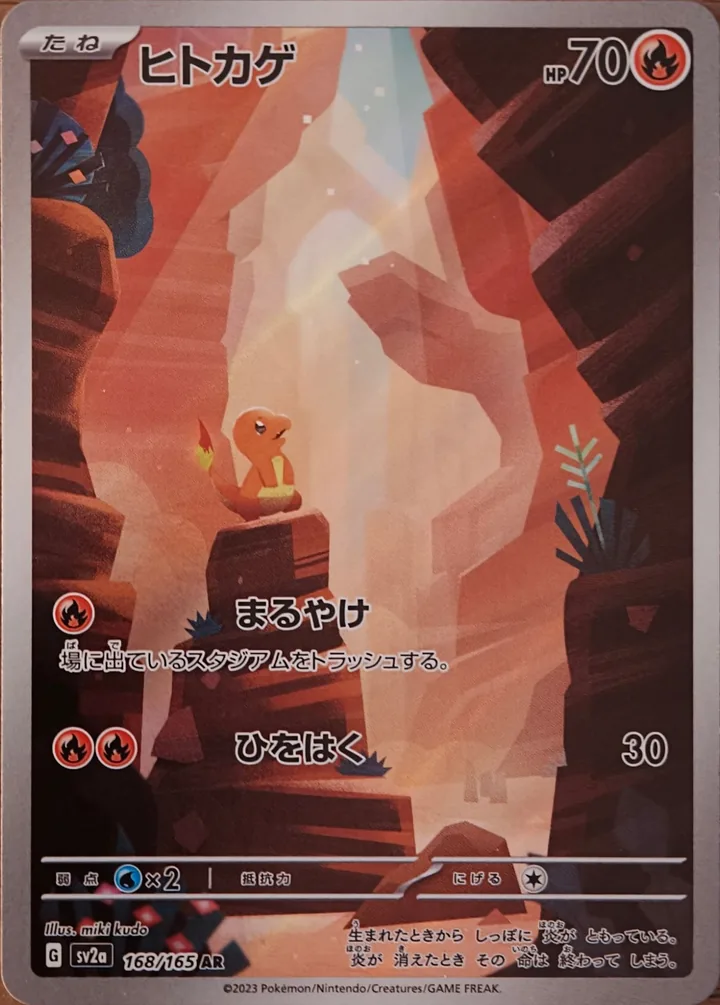 33. Print lineFront, artwork, upper centreA faint vertical line in the sky area. Probably light reflecting off the texture, not a print line.25% sure
- Left / right
- 54.2/45.8
- wider on the left
- Borderline for PSA 10
- Top / bottom
- 50.7/49.3
- wider on the bottom
- Within PSA 10 limit
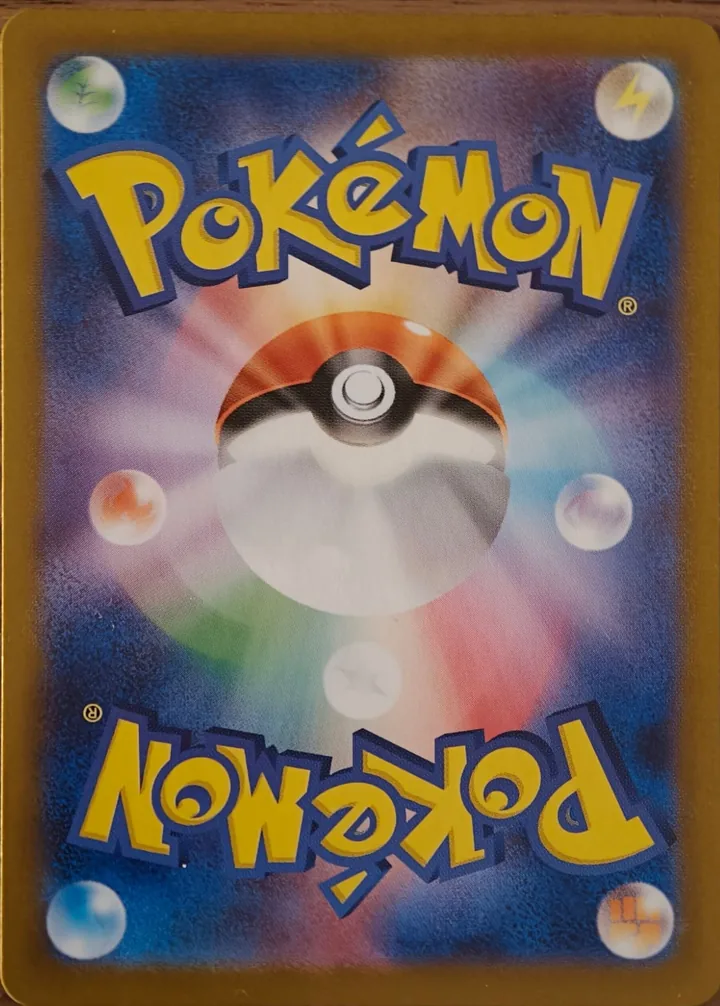 11. Corner whiteningBack, top-left cornerA tiny pale tip on the yellow border. Could be a single fibre of whitening or a reflection.42% sure22. Edge whiteningBack, bottom edge, right halfOne small white speck on the bottom edge. A single speck often still allows a 10.55% sure
- Left / right
- 51.8/48.2
- wider on the left
- Within PSA 10 limit
- Top / bottom
- 56.8/43.2
- wider on the top
- Within PSA 10 limit
What caught our eye
For each spot you can see how serious it is and how sure we are that it's real wear and not a reflection or print texture. The descriptions are written by AI.
Corner whitening
Back, top-left corner
A tiny pale tip on the yellow border. Could be a single fibre of whitening or a reflection.
Micro: only visible at full zoom. 42% sure, possibly real.
Edge whitening
Back, bottom edge, right half
One small white speck on the bottom edge. A single speck often still allows a 10.
Micro: only visible at full zoom. 55% sure, possibly real.
Print line
Front, artwork, upper centre
A faint vertical line in the sky area. Probably light reflecting off the texture, not a print line.
Micro: only visible at full zoom. 25% sure, unsure, may be glare or print.
What's holding back the 10
Biggest effect first.
Possible corner whitening (back, top-left corner; 42% confidence): usually caps at PSA 9 · big effect
A tiny pale tip on the yellow border. Could be a single fibre of whitening or a reflection. Severity: micro (S1).
Possible edge whitening (back, bottom edge, right half; 55% confidence): usually caps at PSA 9, sometimes 10 · big effect
One small white speck on the bottom edge. A single speck often still allows a 10. Severity: micro (S1).
Unconfirmed print line (front, artwork, upper centre; 20% confidence): usually caps at PSA 9, sometimes 10 · small effect
A faint vertical line in the sky area. Probably light reflecting off the texture, not a print line. Severity: micro (S1).
Front centering 54/46: still within PSA 10 limits · small effect
Measured 54/46 left/right on the front (±0.9 points). Limits for a 10 on the front: PSA 55/45, BGS 9.5 55/45 one way and 52/48 the other, CGC 55/45, TAG 55/45. PSA may accept up to 5 points more on the front if the eye appeal is good.
More than one minor flaw: PSA 9 allows only one · small effect
PSA defines a 9 as a card with only one minor flaw. Found: corner whitening, edge whitening and print line.
What we couldn't see
A photo doesn't show everything. These are the things we couldn't (fully) check.
- Some glare on the front: parts of the surface could not be checked.
- Fine holo scratches, print lines and dents: no angled-light photo.
- Trimming, restoration and other alterations can't be detected from photos.
- Gloss and print sharpness can't be judged reliably from photos.